Version-verified guide
Valheim Armor Sets — Every Set by Biome and What It Does
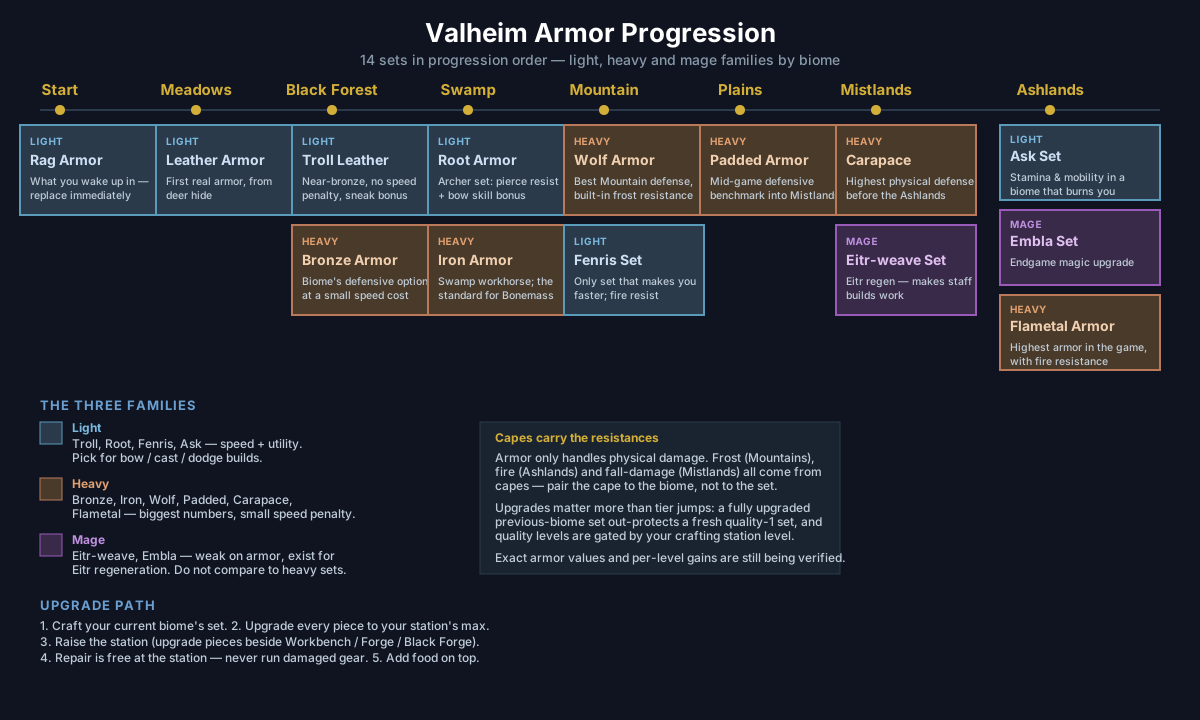
Every Valheim armor set in progression order — from Rag through the Ashlands sets to the 1.0 additions (the Deep North Protector, Vanguard and Caller sets, plus the new Plains-tier Lox Fur set) — with the light versus heavy decision explained.
By Valheim Field Guide Editorial Team
How armor actually works
Three mechanics decide how protected you are:
- Armor is additive across the three body pieces. Helmet, chest and legs each contribute; capes contribute very little armor and are worn for their resistance or special effect.
- Upgrades matter more than tier jumps. A fully upgraded set from the previous biome regularly out-protects a fresh quality-1 set from the new one — and costs less. Quality levels are gated by your crafting station level, which is the step most players skip.
- Armor only handles physical damage. Fire, frost, poison and lightning are handled by resistances from capes, set effects, food and mead. That is why high armor alone does not make the Ashlands safe.
Verified (1.0): the per-piece armor values (including the Deep North Vanguard / Caller / Protector sets) and the +2-per-upgrade rule below are confirmed against valheim.wiki (1.0) and cross-checked with allthings.how. Full per-piece crafting material costs for every set are still being cross-checked (valheim.wiki’s recipe tables for several sets are incomplete), so they are not published here — see our verification workflow.
Confirmed armor values (valheim.wiki, 1.0)
Per-piece armor at quality 1/2/3/4. Every craftable piece gains +2 armor per upgrade level (the rule that makes upgrading beat tier jumps); capes gain +1 per level, the Ashen cape +2.
| Set | Helmet | Chest | Legs |
|---|---|---|---|
| Rag | — (no helmet) | 1 / 2 | 1 / 2 |
| Leather | 2 / 4 / 6 / 8 | 2 / 4 / 6 / 8 | 2 / 4 / 6 / 8 |
| Troll | 6 / 8 / 10 / 12 | 6 / 8 / 10 / 12 | 6 / 8 / 10 / 12 |
| Bronze | 8 / 10 / 12 / 14 | 8 / 10 / 12 / 14 | 8 / 10 / 12 / 14 |
| Root | 8 / 10 / 12 / 14 | 8 / 10 / 12 / 14 | 8 / 10 / 12 / 14 |
| Iron | 14 / 16 / 18 / 20 | 14 / 16 / 18 / 20 | 14 / 16 / 18 / 20 |
| Wolf | 20 / 22 / 24 / 26 | 20 / 22 / 24 / 26 | 20 / 22 / 24 / 26 |
| Fenris | 10 / 12 / 14 / 16 | 10 / 12 / 14 / 16 | 10 / 12 / 14 / 16 |
| Padded | 26 / 28 / 30 / 32 | 26 / 28 / 30 / 32 | 26 / 28 / 30 / 32 |
| Carapace | 32 / 34 / 36 / 38 | 32 / 34 / 36 / 38 | 32 / 34 / 36 / 38 |
| Eitr-weave | 16 / 18 / 20 / 22 | 16 / 18 / 20 / 22 | 16 / 18 / 20 / 22 |
| Ask | 28 / 30 / 32 / 34 | 28 / 30 / 32 / 34 | 28 / 30 / 32 / 34 |
| Embla | 19 / 21 / 23 / 25 | 19 / 21 / 23 / 25 | 19 / 21 / 23 / 25 |
| Flametal | 38 / 40 / 42 / 44 | 38 / 40 / 42 / 44 | 38 / 40 / 42 / 44 |
| Vanguard (Deep North, light) | 34 / 36 / 38 / 40 | 34 / 36 / 38 / 40 | 34 / 36 / 38 / 40 |
| Caller (Deep North, mage) | 22 / 24 / 26 / 28 | 22 / 24 / 26 / 28 | 22 / 24 / 26 / 28 |
| Protector (Deep North, heavy) | 44 / 46 / 48 / 50 | 44 / 46 / 48 / 50 | 44 / 46 / 48 / 50 |
The Deep North (1.0) sets are cast from their moulds at the Black Forge and then hardened in a Frost Foundry — they cannot be crafted directly. Their Q1 values are confirmed (valheim.wiki + allthings.how); the Q2–Q4 figures follow the standard +2-per-level upgrade rule. The Caller set also grants Eitr regeneration (the mage tier); the Protector chest is frost-resistant.
Every set in progression order
| Stage | Set | Family | What it is for |
|---|---|---|---|
| Start | Rag Armor | Light | What you wake up in — replace it immediately |
| Meadows | Leather Armor | Light | First real armor, crafted from deer hide |
| Black Forest | Troll Leather Armor | Light | Near-bronze protection with no speed penalty, plus a sneak bonus |
| Black Forest | Bronze Armor | Heavy | The defensive option of the biome, at a small movement cost |
| Swamp | Root Armor | Light | Archer set: pierce resistance and a bow skill bonus |
| Swamp | Iron Armor | Heavy | The Swamp workhorse and the standard for the Bonemass fight |
| Mountain | Wolf Armor | Heavy | Best Mountain defense, with built-in frost resistance |
| Mountain | Fenris Set | Light | The only set that makes you faster; fire resistance for melee and dodge builds |
| Plains | Padded Armor | Heavy | The mid-game defensive benchmark that carries you into the Mistlands |
| Mistlands | Carapace Armor | Heavy | Highest physical defense before the Ashlands |
| Mistlands | Eitr-weave Set | Mage | Eitr regeneration — the set that makes staff builds work |
| Ashlands | Ask Set | Light | Stamina and mobility builds in a biome designed to burn you |
| Ashlands | Embla Set | Mage | Endgame magic upgrade |
| Ashlands | Flametal Armor | Heavy | The highest armor value before the Deep North, with heat resistance (reduces lava/boiling water damage — not fire damage) |
| Deep North | Vanguard Set | Light | Mobility build for the final biome — Frost Foundry cast |
| Deep North | Caller Set | Mage | Eitr regeneration for magic builds in the Deep North |
| Deep North | Protector Set | Heavy | The endgame heavy tier, with frost resistance on the chest |
| Plains (new in 1.0) | Lox Fur | Light | Lightweight set (jacket, trousers, hood) built from Plains Lox materials — added in the 1.0 patch but a Plains-tier set, not a Deep North cast |
Deep North sets (1.0): Protector, Vanguard and Caller are cast from moulds found in the Winding Tunnels and the Gates of Mörkhalla, then finished in a Frost Foundry using Bloodgold. Per-piece Q1 armor values are confirmed above (Vanguard 34 / Caller 22 / Protector 44, with the standard +2-per-upgrade rule beyond); the Caller’s Eitr regeneration and the Protector’s chest frost resistance are also confirmed.
Light versus heavy: the only real decision
Heavy (Bronze, Iron, Wolf, Padded, Carapace, Flametal) gives the biggest numbers and a small movement penalty. Take it if you block, trade hits and fight bosses head-on.
Light (Troll, Root, Fenris, Ask) trades protection for speed and utility bonuses. Take it if you bow, cast or dodge — and note that Troll is not a “budget” set, it is genuinely competitive through the Black Forest and Swamp for ranged players.
Mage sets (Eitr-weave, Embla) are their own family: they are weak on armor and exist for Eitr regeneration. Do not compare them to heavy sets.
Capes and resistances
Capes are where elemental protection comes from — frost in the Mountains (Wolf Fur, Lox), fall damage in the Mistlands (Feather), and, counterintuitively, frost again in the Ashlands (Asksvin/Ashen give frost, not fire). Ashlands fire is covered by meads and the Fenris set, and lava/boiling-water heat by Flametal. Armor values do not cover any of it. Pair the cape to the biome, not to the set.
Practical upgrade path
- Craft the set your current biome offers.
- Upgrade every piece to the max your station allows before you consider the next tier.
- Raise the station itself — the upgrade pieces beside the Workbench, Forge and Black Forge are what unlock higher quality. Which piece goes where: workstations guide.
- Repair at the station: repairs are free, so there is no reason to run damaged gear.
- Add food on top. Health from food and armor from gear multiply each other’s value — a good meal is part of your defense budget.
Related
- Which weapon to swing while wearing it: weapon tier list
- The timed buffs that stack on top of your gear: Forsaken Powers
- Stability, materials and base layout: building basics
Frequently asked questions
- What is the best armor in Valheim?
- For raw physical defense the Deep North Protector set (1.0) is the ceiling, with Flametal from the Ashlands just below it; before you get there, Carapace from the Mistlands and Padded from the Plains are the defensive benchmarks. For mobility builds the Vanguard set (1.0) is the pick, and for staff users the Caller set (1.0) — or Eitr-weave before the Deep North — is the one that makes a magic build function.
- Should I choose light or heavy armor?
- Heavy sets give the biggest armor numbers and cost movement speed; light sets trade protection for speed and bonuses. If you block and trade hits, go heavy. If you bow, cast or dodge, go light.
- Why does my new armor feel weak?
- Almost always because it is not upgraded. Craftable pieces gain armor per upgrade level, and quality levels are gated by your crafting station level — upgrading the station beside your Workbench or Forge matters as much as crafting the set.
Related guides
- Valheim Damage Types Guide — Every Physical and Elemental Damage Source Explained
Every Valheim damage type — blunt, slash, pierce, fire, frost, poison, spirit, lightning — what each does, which enemies are weak or immune to it, and how it stacks with armor, resistances and status effects.
Verified Valheim 1.0 - Valheim Tools Guide — Pickaxes, Axes, Hammers, Portals, Carts and Ships
Every gathering tool and progression-unlocking item in Valheim — pickaxes that unlock ore tiers, axes that unlock tree tiers, the Hammer that unlocks every building tier, plus Portals, Carts and the three ship types, in the order you need them.
Verified Valheim 1.0 - Valheim Bows & Arrows Guide — Best Bow Line and Every Arrow Type
How Valheim ranged works — the bow progression from Crude Bow to Draugr Fang and the Arbalest, and what every arrow type (fire, frost, poison, silver, needle) is for.
Verified Valheim 1.0